
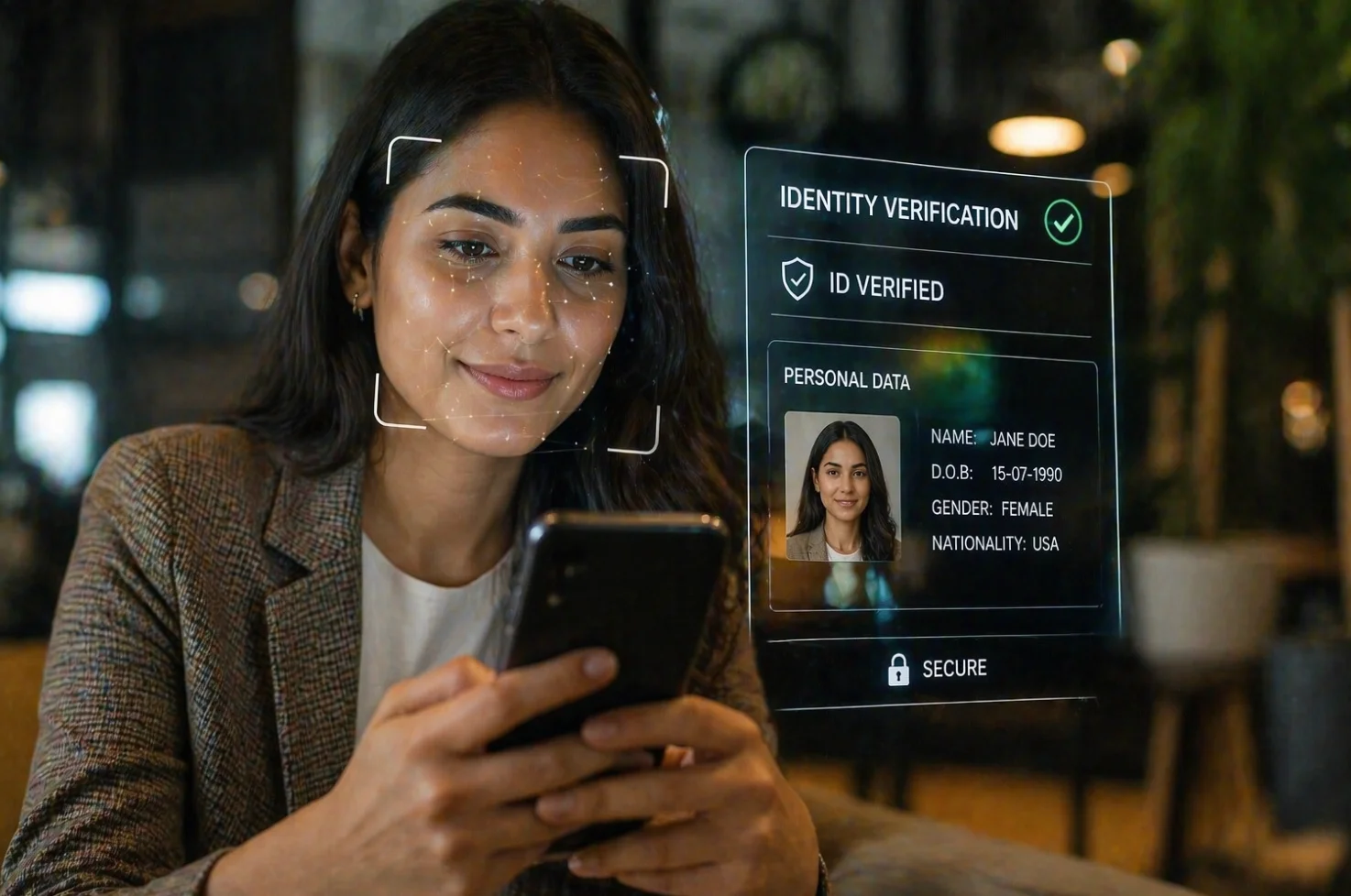
In an era where financial fraud costs UK businesses billions of pounds each year, and where a convincing fake ID can be created with little more than a smartphone and a printer, knowing exactly who you are dealing with has never been more critical. Identity verification, the process of confirming that a person is who they claim to be, sits at the heart of modern compliance, customer onboarding, and fraud prevention. Whether you are opening a bank account, applying for a loan, or signing up for a regulated financial service, digital identity verification is quietly working in the background to protect both businesses and consumers.
This article explains what identity verification is, how it works, where it is being used, and why businesses of all sizes are investing in it as a non-negotiable part of their operations.
Understanding Identity Verification
At its most fundamental level, identity verification is the process of validating that a person’s claimed identity matches a verified, trusted source. In traditional settings, this might have meant showing a passport at a bank counter. Today, the process has moved almost entirely online, and the technology behind it has grown significantly more sophisticated.
A modern identity verification solution typically combines several layers of checks. These may include document verification (scanning a passport or driving licence), biometric matching (comparing a selfie to the photo on the document), database cross-referencing (matching details against government records or credit bureau data), and liveness detection (confirming the person submitting the check is physically present and not using a static photograph or a deepfake).
The goal is not just to catch outright fraud. It is also to meet the legal obligations that many industries now face under anti-money laundering (AML) and Know Your Customer (KYC) regulations. In the UK, this regulatory framework is largely overseen and enforced by the Financial Conduct Authority, which requires firms operating in financial services to carry out robust checks before onboarding new clients or processing significant transactions.
Why Identity Verification Matters in Today’s Digital Economy
The shift to online services has created enormous convenience for consumers, but it has also opened the door to a new generation of fraud. Identity fraud in the UK reached record levels in recent years, with tens of thousands of cases reported annually involving stolen personal data used to open accounts, take out credit, and make unauthorised purchases.
One of the most persistent challenges businesses face is the use of a fake ID. Modern forgeries can be startlingly convincing to an untrained eye, and in a fully digital onboarding environment, there is no human present to spot subtle inconsistencies. This is precisely why automated digital identity verification has become so valuable. It applies consistent, machine-level scrutiny to every document submitted, 24 hours a day, without fatigue or bias.
Beyond fraud prevention, there is the matter of trust. Consumers are increasingly aware of data privacy and security. A business that visibly invests in strong ID verification signals to its customers that it takes their security seriously. This is not just good compliance practice; it is a good business strategy.
How Digital Identity Verification Works
Modern identity verification services operate through a combination of artificial intelligence, machine learning, and access to trusted data sources. The process, while technically complex on the back end, is typically seamless for the end user and can be completed in under two minutes.
Document Verification
The user submits a photograph or scan of an identity document, usually a passport, national ID card, or driving licence. The system analyses the document for authenticity markers: holograms, microprinting, font consistency, expiry validity, and document format standards specific to the country of issue. A sophisticated identity verification platform can assess hundreds of document types from across the world, checking each against known templates and flagging anomalies.
Biometric Matching and Liveness Detection
Once the document has been verified, the user is typically asked to submit a selfie or complete a short video prompt. The system uses facial recognition to compare the live image with the photograph embedded in the document. Critically, liveness detection technology is applied to ensure the submission is a real, live person rather than a printed photo held in front of a camera, a technique commonly used by fraudsters.
Data Cross-Referencing
Many identity verification services go further by cross-referencing the submitted details against third-party databases, including credit reference agencies, electoral rolls, sanctions lists, and PEP (Politically Exposed Person) databases. This adds a powerful additional layer to the overall check and ensures businesses are meeting their AML and KYC obligations comprehensively.
The Role of the Identity Verification API
For businesses building their own platforms, integration is typically achieved through an Identity Verification API, a set of programming interfaces that allow developers to embed verification checks directly into their own applications, websites, or onboarding flows. Rather than building the technology from scratch, a business connects its system to an established provider, making the process both faster to deploy and significantly more cost-effective.
Key Use Cases Across Industries
Identity verification is no longer confined to banks and financial institutions. Its adoption has spread across a wide range of sectors, each with its own specific compliance requirements and fraud risks.
Financial Services and Fintech: This remains the largest and most regulated use case. Banks, lenders, insurance companies, cryptocurrency exchanges, and payment processors all rely on a robust ID verification solution to meet FCA requirements, prevent account takeover fraud, and comply with AML regulations.
Online Gaming and Gambling: The UK Gambling Commission requires operators to verify the age and identity of all players. This makes digital identity verification essential for any licensed platform, both to prevent underage gambling and to identify problem gamblers subject to self-exclusion schemes.
Healthcare Patient Identity Verification: is becoming increasingly important as medical services move online. Prescription platforms and telehealth services need to confirm that the person requesting treatment or medication is who they claim to be, protecting both patient safety and regulatory compliance.
Rental and Property Landlords: And letting agents use identity verification tools to vet prospective tenants, reducing the risk of rental fraud and ensuring compliance with Right to Rent legislation in the UK.
HR and Remote Hiring: With remote work now standard in many industries, employers are using digital identity checks during the hiring process to verify right-to-work documentation, professional credentials, and criminal record disclosures, all without requiring the candidate to attend in person.
Regulatory Relevance: The FCA and the Compliance Imperative
In the United Kingdom, identity verification is not simply a best practice for many businesses; it is a legal obligation. The Financial Conduct Authority sets out detailed requirements for firms operating under its authorisation, particularly in relation to Know Your Customer (KYC) checks and anti-money laundering procedures.
Under the Money Laundering, Terrorist Financing and Transfer of Funds Regulations 2017, firms must verify the identity of their customers before establishing a business relationship or carrying out certain transactions. Failure to comply can result in significant financial penalties, loss of FCA authorisation, and, in serious cases, criminal prosecution.
This is where a reliable identity verification platform becomes more than a technology purchase; it becomes a core part of a business’s risk management framework. By building verification checks into customer-facing processes through identity verification software, firms create an auditable record of due diligence that can be presented to regulators if required.
Business Adoption: What to Look for in an Identity Verification Service
As the market for identity verification services has grown, so too has the range of providers and solutions available. For businesses considering adoption or reviewing their existing setup, several factors are worth careful consideration.
- Accuracy and coverage: A good identity verification solution should support a wide range of document types and nationalities, particularly important for businesses with an international customer base.
- Speed and user experience: Verification that takes too long or requires multiple retries leads to customer drop-off. The best platforms process checks in seconds with minimal friction.
- Compliance depth: Look for providers that go beyond basic document checks to offer sanctions screening, PEP checks, and adverse media monitoring.
- Integration flexibility: A well-documented Identity Verification API makes it straightforward for development teams to embed checks into existing systems without rebuilding entire workflows.
- Data security: Any platform handling sensitive personal documents must meet strict data security standards, including GDPR compliance for businesses operating in the UK and EU.
The market includes both enterprise-grade identity verification software providers and leaner, API-first tools designed for fast-growing startups. The right choice depends on the scale of onboarding volume, the complexity of compliance requirements, and the technical capabilities of the internal team.
The Future of Identity Verification
The technology underpinning identity verification is advancing rapidly. Biometric authentication is becoming more precise, AI-driven document analysis is catching increasingly sophisticated forgeries, and real-time checks against global databases are reducing the window in which a fraudster can operate.
Emerging trends include reusable digital identity, where a verified identity can be stored and shared across multiple services without repeating the full verification process each time and the integration of open banking data into identity checks, which provides an additional layer of financial behavioural verification.
Regulators, too, are moving in this direction. The UK government has signalled its intent to create a broader digital identity framework, which would allow verified identities to be shared across sectors in a standardised, privacy-preserving way. For businesses, this represents both an opportunity and a mandate to modernise their approach now, before regulatory requirements make it compulsory.
Conclusion
Identity verification has grown from a back-office compliance task into a strategic business function. In a digital economy where fraud is sophisticated, regulations are tightening, and customers expect both security and convenience, investing in the right identity verification solution is no longer optional. Whether a business is a regulated financial firm navigating FCA requirements, a growing fintech onboarding thousands of customers a month, or a healthcare platform managing sensitive patient data, the ability to confirm who someone is quickly, accurately, and securely is fundamental.
The companies that treat digital identity verification as infrastructure rather than an afterthought will be better positioned to grow with confidence, remain compliant, and build the kind of customer trust that drives long-term success.

Doris Pollard, a mesmerizing wordsmith and experienced blogger, crafts narratives that carry readers into unexplored realms. Infused with insightful perspectives and vibrant storytelling, Doris’s mastery of language captivates both hearts and minds, making an enduring impression on the literary landscape.