
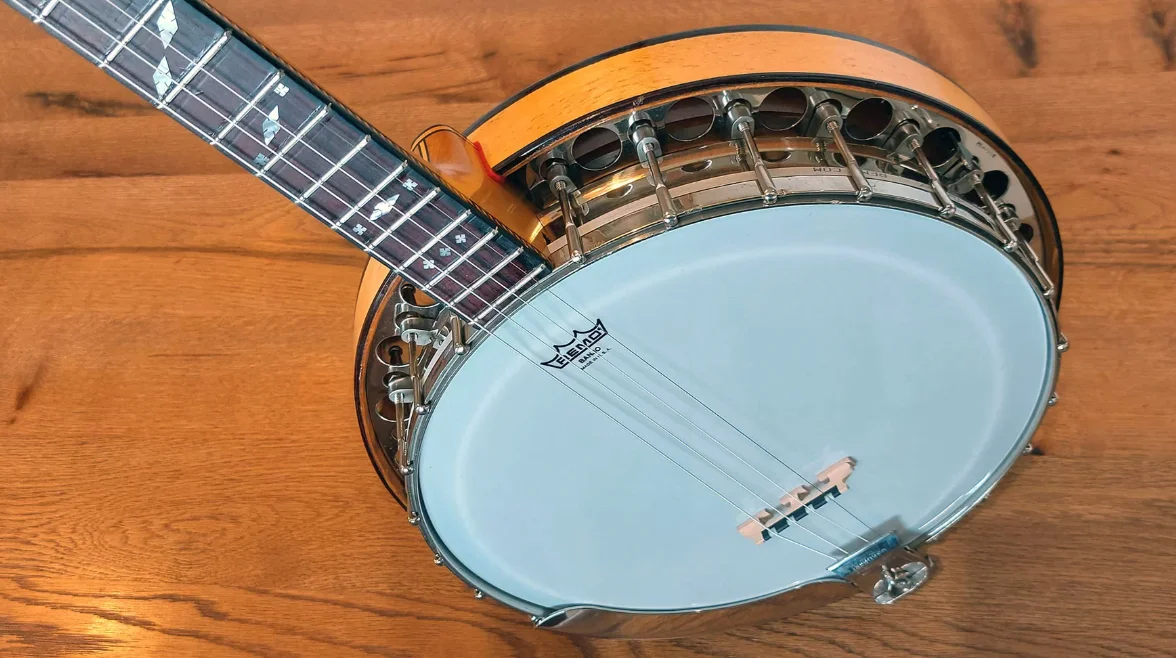
With its sharp, punchy sound and compact four-string design, the tenor banjo has remained popular for decades in jazz, folk, and Irish traditional music. Whether you’re new to banjos or exploring different string instruments, understanding the tenor banjo is a great place to start.
What is a Tenor Banjo?
A tenor banjo is a four-string banjo with a short neck and a bright, punchy sound. Originally popular in jazz bands, it later became widely used in Irish traditional music. Its fast playability and rhythmic tone make it popular among both beginners and experienced musicians.
Key Features of Tenor Banjo
The tenor banjo stands out from other banjo types because of its unique construction, tone, and playing style. Understanding its main features can help beginners choose the right instrument.
1. Four-string Design
Unlike a traditional five-string banjo, the tenor banjo features four strings and doesn’t include a drone string. This design makes chord transitions, melody playing, and rhythmic strumming more straightforward, especially for jazz and Irish folk musicians seeking speed, precision, and cleaner note articulation.
2. Shorter Neck and Scale Length
The tenor banjo has a short neck and reduced scale length compared to many other banjos. This compact design improves playability, allows faster hand movement, and makes stretches easier for beginners while also contributing to the instrument’s bright and responsive tonal character.
3. Bright and Percussive Tone
A tenor banjo produces a bright, punchy sound with quick note decay and strong rhythmic presence. Its sharp tonal attack helps it cut through ensembles, making it especially popular in traditional jazz bands, Irish sessions, and acoustic folk performances that require energetic projection.
4. 17-fret and 19-fret Configurations
Tenor banjos are commonly available in 17-fret and 19-fret versions. A 17-fret model usually offers easier handling and a warmer tone, while a 19-fret banjo provides greater projection, sustain, and fretboard space, making it popular among advanced jazz and traditional musicians.
Different Types of Tenor Banjo
Different tenor banjos are designed to suit specific music styles, playing preferences, and tonal characteristics.
1. Irish Tenor Banjo
The Irish tenor banjo is commonly tuned to GDAE, matching a fiddle’s tuning one octave lower. It’s widely used in traditional Irish music for fast melodic playing, lively dance tunes, and sharp note articulation during sessions and folk performances.
2. Jazz Tenor Banjo
Jazz tenor banjos are typically tuned to CGDA and are known for their strong rhythmic projection. Popular during the early jazz era, they were commonly used in Dixieland bands where their bright, cutting tone helped maintain rhythm alongside brass instruments.
3. Open-back Tenor Banjo
An open-back tenor banjo lacks the rear resonator found on some models, producing a softer and warmer tone. These banjos are lighter in weight and are often preferred by folk musicians or players seeking a more mellow acoustic sound.
4. Resonator Tenor Banjo
A resonator tenor banjo includes a wooden back designed to project sound forward with greater volume and brightness. This design creates a sharper, more powerful tone, making resonator models especially popular in jazz bands and larger acoustic music settings.
Final Thoughts
The tenor banjo remains a distinctive instrument valued for its bright tone, rhythmic energy, and versatility across multiple music styles. Whether used for Irish traditional tunes, jazz rhythms, or folk performances, its beginner-friendly design and expressive sound continue attracting musicians seeking something different from a standard five-string banjo.

Doris Pollard, a mesmerizing wordsmith and experienced blogger, crafts narratives that carry readers into unexplored realms. Infused with insightful perspectives and vibrant storytelling, Doris’s mastery of language captivates both hearts and minds, making an enduring impression on the literary landscape.