
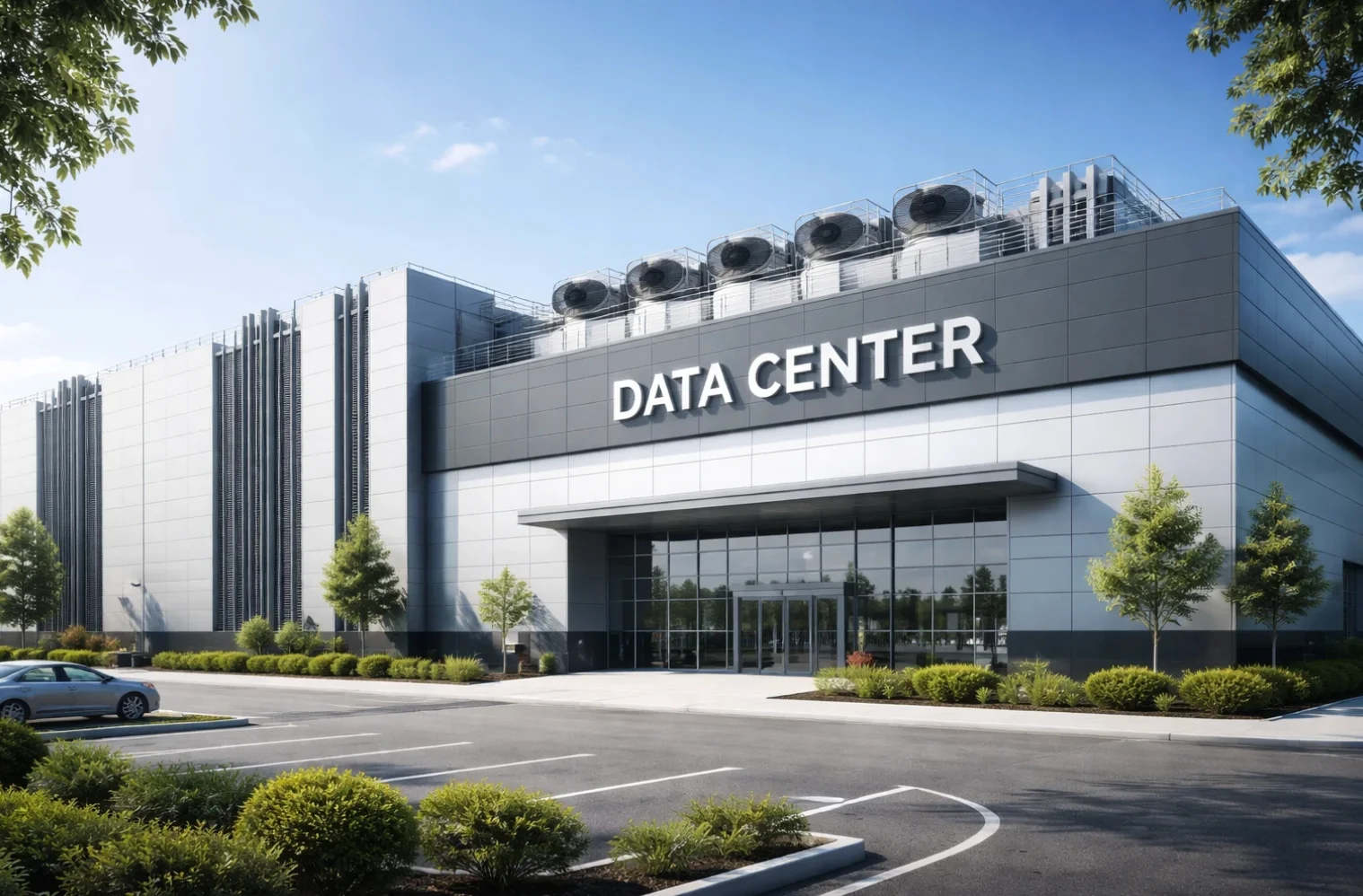
As digital workloads grow, companies inevitably face a key question: should they host equipment in their own server room or move their infrastructure to a professional data center, including facilities designed as an AI server data center for high-density computing?
This decision affects not only IT architecture, but also business resilience, financial models, and scalability. For European companies, especially those working with international clients, infrastructure placement is directly linked to reliability, compliance with security standards, and access to global connectivity.
Frankfurt am Main, as the largest digital hub in Europe, has become a prime example of how professional data centers create an ecosystem for banks, SaaS platforms, fintech companies, and multinational corporations. However, many organizations still rely on their own server rooms.
To make an informed decision, it is essential to clearly understand the difference between a server room and a data center.
What is a server room
A server room is a dedicated space within an office or industrial building designed to host servers and networking equipment.
Typically, such a room includes:
- one or several racks
- an air conditioning system
- an uninterruptible power supply (UPS)
- a basic access control system
A server room is usually built for internal company needs. Its infrastructure is designed based on current requirements rather than future scalability or external redundancy standards.
Limitations of a server room become apparent as workloads increase:
- limited power capacity
- no N+1 redundancy
- restricted cooling capabilities
- dependency on a single internet provider
- lower level of physical security
At early stages of business development, a server room may be justified. However, as digital services expand and uptime requirements increase, the risks begin to grow.
What is a professional data center
A professional data center is a specialized facility designed exclusively for hosting IT infrastructure. Unlike a server room, it is built from the outset with redundancy, scalability, and 24/7 continuous operation in mind.
Modern European data centers, especially in locations such as Frankfurt am Main, comply with international Tier standards and typically include:
- redundant power supply lines
- diesel generators
- cooling systems with built-in redundancy
- multi-layer physical security
- 24/7 monitoring
- access to multiple telecom carriers
A data center is not just a room with servers. It is an engineered ecosystem in which every critical component is duplicated to minimize the risk of downtime.
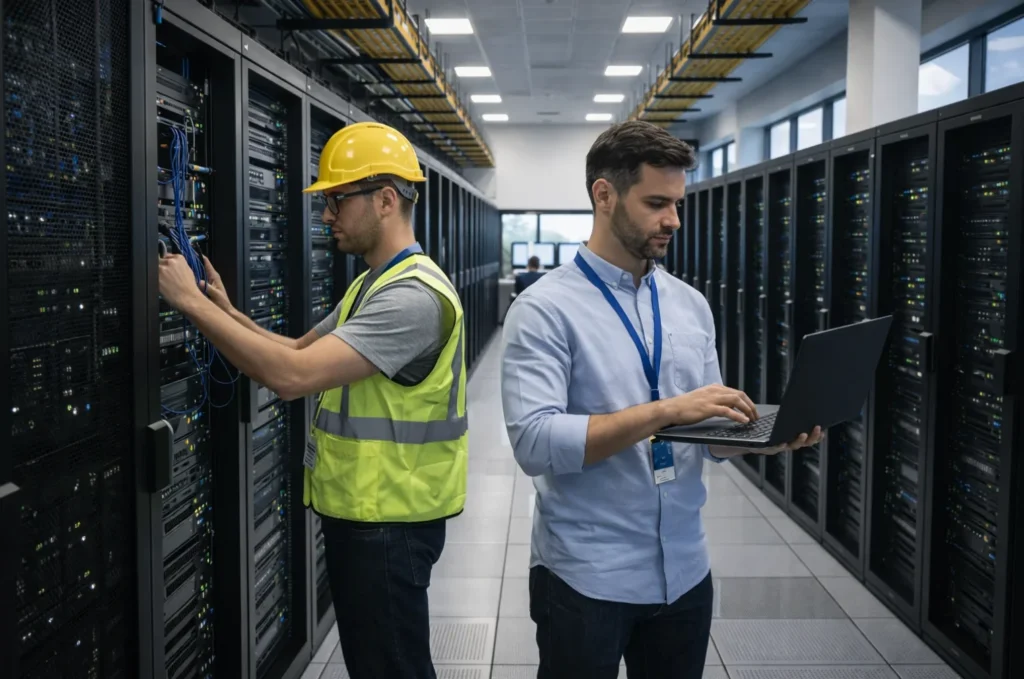
Key differences: infrastructure and redundancy
The main difference between a data center and a server room lies in the level of engineering reliability.
Power supply
In a typical server room, there is usually a single power feed and a UPS. In the event of a major failure or power outage, the company depends on the municipal grid.
In a professional data center, the following are implemented:
- two independent power feeds
- N+1 or 2N redundancy systems
- diesel generators with fuel reserves
- load distribution across independent power circuits
This ensures that equipment continues operating even during significant external power failures.
Cooling
A server room is often equipped with standard commercial or basic industrial air conditioning systems without full redundancy. Overheating remains one of the most common causes of failures.
Data centers use:
- industrial precision cooling systems
- hot and cold aisle containment
- temperature monitoring systems
- redundant cooling loops
This is critical for high-density racks and modern server hardware.
Network connectivity and scalability
In a server room, a company is typically connected to a single internet provider. If the connection fails, access to services may be completely lost.
In European hubs such as Frankfurt, data centers provide:
- access to multiple telecom carriers
- direct connections to Internet Exchanges (IX)
- low latency across Europe
- the ability to rapidly increase bandwidth
This is especially important for SaaS platforms, fintech projects, and international companies for which network stability is a critical factor.
Security and compliance
An office server room rarely meets strict security requirements. Access control may be limited to an electronic lock, and video surveillance may be minimal.
A professional data center includes:
- multi-factor access control
- 24/7 video surveillance
- biometric systems
- visitor logs
- security zone segmentation
For companies processing personal data of EU citizens, this is directly linked to compliance with GDPR and industry regulations.
Economics: CAPEX vs OPEX
At first glance, a server room may appear to be the more cost-effective solution. The company already owns the space, purchases equipment, and manages the infrastructure independently. However, a detailed financial analysis reveals a far more complex cost structure.
A server room requires significant capital expenditures (CAPEX):
- electrical infrastructure upgrades
- installation of industrial cooling systems
- procurement of UPS units and battery systems
- fire suppression systems
- enhanced physical security
- network infrastructure upgrades
In addition, ongoing operational expenses arise:
- electricity costs
- maintenance of cooling systems
- UPS battery replacement
- personnel salaries
- insurance
In a professional data center, the model is typically based on an OPEX approach. The company rents a rack or part of it and pays for:
- electricity
- cooling
- physical security
- connectivity to telecom carriers
- basic engineering support
This makes costs predictable and scalable. As the business grows, there is no need to rebuild premises or invest in additional infrastructure.
For European companies, flexibility is also critical. Hosting in hubs such as Frankfurt allows capacity to scale without long-term construction projects.
When a server room is justified
Despite the advantages of data centers, a server room is not always the wrong decision.
It may be justified in the following cases:
- small-scale infrastructure
- low redundancy requirements
- no external clients
- local production tasks
- temporary projects
For small internal systems or laboratory environments, an in-house server room may be economically reasonable.
However, as workloads increase, as companies expand into international markets, or as they operate in regulated industries, the risks begin to outweigh the benefits.
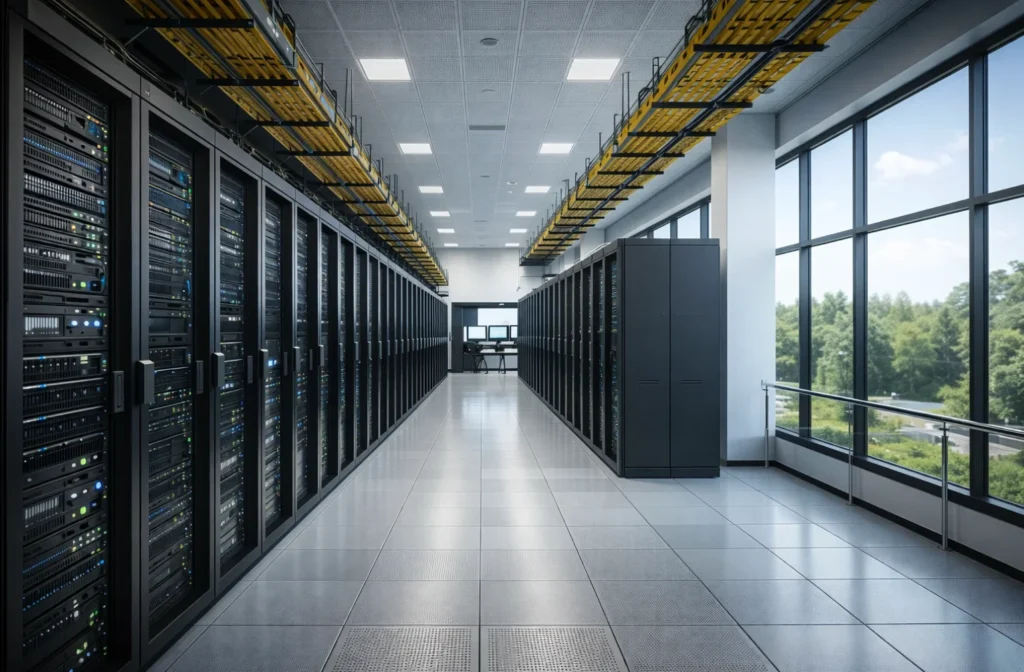
When migration to a data center becomes necessary
Moving infrastructure to a professional data center becomes a logical step if:
- the business operates 24/7
- clients are located in multiple countries
- high availability (99.9% and above) is required
- infrastructure is continuously scaling
- compliance with security standards is necessary
- downtime leads to direct financial losses
For companies targeting the European market, hosting in infrastructure hubs such as Frankfurt provides:
- minimal latency across Europe
- access to major internet exchange points
- high engineering reliability
- an established ecosystem of partners
Data center as the foundation of digital resilience
The choice between a data center and a server room is not only a technical decision, but a strategic step in business development. A server room may be justified at early stages or for local tasks. However, as digital workloads grow and companies expand internationally, a professional data center provides a level of redundancy, security, and scalability that is difficult to replicate in an office environment.
For European B2B companies, hosting infrastructure in specialized hubs is no longer a luxury, but a necessity to ensure stability and competitiveness.

Doris Pollard, a mesmerizing wordsmith and experienced blogger, crafts narratives that carry readers into unexplored realms. Infused with insightful perspectives and vibrant storytelling, Doris’s mastery of language captivates both hearts and minds, making an enduring impression on the literary landscape.