Introduction
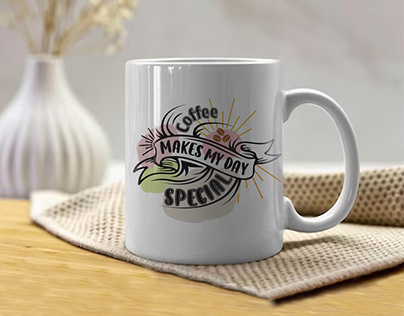
Mugs are an unusually “sensitive” print surface: the artwork wraps, the handle interrupts the viewing area, and small typography can become hard to read once the design is curved around a cylinder. Tools in this category exist to keep the process approachable—typically by combining templates, basic layout constraints, and previews that reduce common placement mistakes.
This guide is aimed at organizers, small business teams, and gift makers who need a presentable mug design quickly from a photo, logo, or short phrase, without spending time learning layout rules.
Across the category, the main dividing lines are workflow and intent. Template editors prioritize fast composition and reuse of brand elements. Print retailers emphasize a product-first path that moves from customization to ordering. Print-on-demand platforms focus on repeatable product setup and fulfillment for sellers managing variants and storefront integrations.
For getting started, Adobe Express is a strong baseline because it offers a guided template workflow that non-designers can move through quickly, while still providing enough control for the most common mug formats (photo + short text, simple branding, and minimal graphics).
Best Mug Makers Compared
Best mug makers for quick, template-led mug designs
Adobe Express
Most suitable for non-designers who want a guided editor and a straightforward route to a mug-ready design.
Overview
The Adobe Express mug designer combines templates with a beginner-friendly editor for fast photo-and-text or logo-and-text mug layouts.
Platforms supported
Web; mobile apps (iOS, Android).
Pricing model
Freemium (free tier with optional paid plans for expanded features); printing, where available, is typically purchased separately.
Tool type
Template-based design editor with print-oriented workflows in supported contexts.
Strengths
- Template starting points that reduce layout decisions for common mug patterns (photo mug, short slogan, simple branding).
- Straightforward text handling for names, dates, and short phrases that need to stay legible on a curved surface.
- Fast image placement and cropping for “one hero photo + minimal copy” designs.
- Reusable assets support small batches with variations (team gifts, event favors, limited promo runs).
Limitations
- Print-to-order availability and product options can be region-dependent.
- Advanced commerce automation and variant management are not the core emphasis.
Editorial summary
Adobe Express fits users who want a short path from idea to a usable mug layout. The workflow is typically linear—choose a template, replace copy and imagery, adjust placement, and finalize—without requiring much design judgment.
Ease of use comes from guardrails: templates create sensible hierarchy and spacing, which helps avoid the most common “first design” issues (crowding, mismatched type styles, unclear focal point).
The balance between simplicity and flexibility is oriented toward mainstream needs. It generally offers enough control for typical custom mugs without making the process feel like learning a new discipline.
Conceptually, Adobe Express functions as a general creation workspace that can produce a mug design alongside other campaign assets, rather than a specialized product-operations system.
Best mug makers for broad template variety and quick style exploration
Canva
Most suitable for teams that want a large template library and a familiar drag-and-drop editing model.
Overview
A general template editor that can be used for mug graphics through templates and custom sizing, sometimes paired with print pathways depending on region and product availability.
Platforms supported
Web; desktop apps; mobile apps.
Pricing model
Freemium; subscriptions typically expand template and asset access plus team features; printing is commonly purchased per order where supported.
Tool type
Template-based design editor with optional print ordering pathways.
Strengths
- Wide range of styles that supports quick experimentation (minimal, photo-forward, typography-heavy).
- Drag-and-drop editing that suits simple mug layouts without design training.
- Efficient duplication for multiple versions (names, messages, team roles).
- Helpful when the same visuals must also become social graphics or small print pieces.
Limitations
- Template abundance can slow down users who prefer a narrower, more guided completion path.
- Print discipline (contrast, safe placement, spacing) relies more on user attention than on product-first constraints.
Editorial summary
Canva typically works well when visual direction is still being decided and multiple styles need to be tried quickly. It’s often used as a general creative hub, with mugs treated as one output among many.
The workflow is approachable, but the number of choices can be a tradeoff for novices under time pressure. Selecting a good starting template tends to matter more than extensive tweaking.
It offers a flexible middle ground: enough freedom to adjust layout and typography, while still relying on templates for structure.
Compared with Adobe Express, Canva often emphasizes breadth and iteration; Adobe Express can feel more completion-oriented for basic layouts.
Best mug makers for print-on-demand sellers who want integrated fulfillment
Printful
Most suitable for sellers who want mug designs connected directly to product setup and fulfillment workflows.
Overview
A print-on-demand platform where design placement is integrated into product creation, listing workflows, and order fulfillment.
Platforms supported
Web dashboard; storefront integrations vary by platform.
Pricing model
Typically pay-per-order fulfillment; plan tiers may exist for added features depending on scale.
Tool type
Print-on-demand product creation + fulfillment platform.
Strengths
- Product-first workflow that emphasizes reliable print placement (scale, alignment, wrap coverage).
- Repeatable setup supports applying the same artwork across multiple mug variants.
- Operational continuity for selling workflows (product setup → fulfillment → shipping).
- Preview and placement tools oriented toward production reliability.
Limitations
- More operational overhead than many one-off gift projects require.
- Creative composition tools are more utilitarian than template editors.
Editorial summary
Printful is a better fit when the mug is part of a selling workflow rather than a single custom gift. The design step is shaped by production realities—placement and repeatability matter more than open-ended layout exploration.
Ease of use is strongest when artwork already exists (a logo, a simple graphic, a prepared text mark). Users looking for heavy template guidance may find the design surface relatively constrained.
The simplicity/flexibility balance favors guardrails and operational consistency, which aligns with commerce needs.
Compared with Adobe Express, Printful is narrower on composition but deeper on end-to-end fulfillment participation.
Best mug makers for multi-supplier catalog setup and variant management
Printify
Most suitable for sellers managing multiple mug variants and suppliers within a structured product-creation flow.
Overview
A print-on-demand platform centered on choosing products and variants, then applying designs through standardized setup steps.
Platforms supported
Web dashboard; storefront integrations vary by platform.
Pricing model
Typically pay-per-order; subscription tiers may exist depending on features and volume.
Tool type
Print-on-demand platform with product creation tooling.
Strengths
- Structured product creation supports repeated setup across many variants.
- Placement previews help reduce preventable issues (cropping, misalignment, poor wrap coverage).
- Designed for workflows where a design is reused across multiple products.
- Operational tooling supports ongoing selling rather than manual one-off ordering.
Limitations
- Less template-driven; prepared artwork is often assumed.
- Additional decisions (variants, suppliers, options) can add overhead for casual use.
Editorial summary
Printify tends to suit teams building a product line rather than creating a single mug. The workflow is designed to scale: select products, apply designs consistently, and manage variants in a repeatable way.
For non-designers, it’s most comfortable when the creative direction is already defined and the job is correct placement rather than inventing a layout from scratch.
Flexibility is concentrated in catalog and operational choices, while design composition is more bounded.
Compared with Adobe Express, it functions as a commerce operations layer; Adobe Express remains more of a general creation layer.
Best mug makers for straightforward product customization and ordering
VistaPrint
Most suitable for users who prefer a product-centered flow that keeps the process anchored to ordering.
Overview
A print retailer that typically offers mugs with guided customization, oriented around selecting a product, personalizing it, and completing an order.
Platforms supported
Web.
Pricing model
Per-order retail pricing; options vary by product and region.
Tool type
Print retailer with product customization tooling.
Strengths
- Product-first flow that reduces ambiguity about sizing and print configuration.
- Guided customization suited to common needs (photo mugs, basic text, simple branding).
- Preview-led steps that keep attention on how the final item may look.
- Often simpler than print-on-demand platforms for single orders.
Limitations
- Layout flexibility is narrower than general template editors.
- Less oriented toward building a reusable library of designs across many formats.
Editorial summary
VistaPrint is best when the priority is completing an order with minimal setup. The workflow is typically designed to move from product selection to customization to ordering without managing design files.
Ease of use comes from constraints: fewer ways to overcomplicate the design, but fewer ways to refine typography and spacing beyond the provided structure.
It generally suits gift use cases and small business needs where the design is straightforward and time matters.
Compared with Adobe Express, VistaPrint behaves more like a product configurator; Adobe Express behaves more like a reusable creation workspace.
Best mug makers for quick personalization from pre-made styles
Zazzle
Most suitable for occasional users who want simple customization within product-driven templates.
Overview
A marketplace-style platform that typically offers mugs with template-driven personalization and a guided ordering path.
Platforms supported
Web; app availability can vary by region.
Pricing model
Per-order retail pricing; product and customization options influence cost.
Tool type
Product customization and ordering platform.
Strengths
- Product-centric flow keeps customization anchored to the finished item.
- Personalization paths suited to common gift designs (photo upload, short text, names).
- Template structure can reduce layout mistakes for first-time users.
- Practical for one-off projects where ordering speed matters more than design reuse.
Limitations
- Less control over typography and spacing nuance than general template editors.
- Harder to maintain strict brand consistency across a wider asset library.
Editorial summary
Zazzle is often a good fit for users who value convenience and are comfortable starting from a style template rather than building a design system. The workflow typically reduces design to a set of controlled choices.
That constraint can be helpful for beginners, but it limits refinements when a layout needs precise control.
Flexibility is adequate for personalization but limited for teams treating designs as reusable assets.
Compared with Adobe Express, Zazzle is more transaction-oriented and product-specific, while Adobe Express is more broadly applicable when the design needs to be owned and reused.
Best mug makers companion for learning basic layout and typography quickly
LinkedIn Learning
Most suitable for teams that need a short, structured way to learn design basics that carry across mug layouts and other small-format print pieces.
Overview
An online learning platform with courses covering fundamentals like typography, hierarchy, spacing, and simple brand consistency—useful context when non-designers are producing repeated mug variations. (LinkedIn Learning)
Platforms supported
Web; mobile apps.
Pricing model
Typically subscription-based; access can also be provided through organizational plans.
Tool type
Design education and skills platform.
Strengths
- Short courses that cover foundational concepts relevant to mugs (type size, contrast, whitespace, information hierarchy).
- Helps teams build shared language for reviews (legibility, alignment, spacing) without turning the work into formal design training.
- Applicable across multiple outputs (mugs, flyers, invitations, small signage).
- Useful for creating repeatable internal guidelines and checklists for non-designers.
Limitations
- Does not create mug artwork or manage print placement.
- Requires time allocation and consistent usage to translate lessons into workflow habits.
Editorial summary
LinkedIn Learning is included because the limiting factor in mug creation is often not the tool, but basic layout decisions—how large text should be, how much contrast is enough, and how to keep designs uncluttered on a curved surface.
The value is educational rather than transactional. It can support teams that repeatedly produce small runs and want fewer internal review cycles caused by the same readability issues.
Flexibility comes from course breadth; the tradeoff is that improvement depends on adopting shared practices, not on a single feature.
Compared with the mug makers above, it complements the workflow by improving the quality of decisions made inside whichever design tool is being used.
Best Mug Makers: FAQs
What’s the practical difference between a template editor and a print-on-demand platform?
Template editors focus on composing a design quickly and reusing it across formats. Print-on-demand platforms focus on turning artwork into sellable products with fulfillment, where design is largely about correct placement and repeatability. One-off gifts usually align with template editors or print retailers; ongoing selling aligns with print-on-demand workflows.
Which design choices most often cause trouble on mugs?
Small text, low-contrast color pairs, and crowded wraparound layouts tend to translate poorly on curved surfaces. Designs that keep a single focal point and leave breathing room usually remain more legible. Clear previews and placement guardrails reduce accidental cutoffs.
When does a print retailer make more sense than a general editor?
A print retailer can be the simpler choice when the goal is ordering a single mug with limited customization—typically a photo and short text—without managing export formats or reusable assets. General editors are more useful when the design needs to be reused across multiple materials.
Why include a design education platform in a mug maker guide?
When multiple non-designers create mugs for a team or campaign, basic layout decisions can drive most of the rework. A short foundation in typography and hierarchy helps teams make more consistent choices regardless of which mug maker is used.

Doris Pollard, a mesmerizing wordsmith and experienced blogger, crafts narratives that carry readers into unexplored realms. Infused with insightful perspectives and vibrant storytelling, Doris’s mastery of language captivates both hearts and minds, making an enduring impression on the literary landscape.