
Introduction
In today’s world, excessive noise is not just a nuisance—it can disrupt productivity, damage equipment, and reduce comfort in both industrial and everyday environments. This is where acoustic barriers step in as essential tools for controlling airborne noise, suppressing vibrations, and minimising transmission loss across a wide range of applications. Modern barrier products are engineered with flexibility, durability, and performance in mind, ensuring they offer effective sound insulation while adapting easily to different surfaces and challenging conditions.
Below is an in-depth look at how acoustic barriers work, where they are used, and why they have become an integral part of noise-control solutions across multiple industries.
1. Acoustic Barriers: What They Are?
Acoustic barriers are specialised sound-insulating materials designed to reduce the amount of sound that passes through structures or surfaces. Unlike foam panels that mainly absorb sound inside a room, barrier products provide mass-based noise insulation, making them ideal for blocking airborne noise and reducing vibration-generated sound.
Key Functional Benefits
- Airborne sound reduction: Helps stop sound waves from travelling through walls, panels, or machinery surfaces.
- Impact sound insulation: Minimises vibrations and mechanical noise caused by moving parts or machinery.
- Transmission loss prevention: Reduces the energy of sound waves, preventing noise from escaping or entering a space.
- Flexibility and malleability: Easily applied to flat, curved, or irregular surfaces, making them ideal for complex installations.
Modern acoustic barriers can also be combined with acoustic foam layers to create a custom laminate, offering both sound absorption and sound blockage in one powerful solution.
2. Types of Barrier Products and Their Special Features
Acoustic barriers are not a “one material fits all” product. Different environments and noise issues require different solutions. Here are the main types of barrier products used today, each engineered for specific performance needs:
2.1 Polymeric Acoustic Barriers (C03 & C09)
Polymeric barriers such as C03 (1.4mm) and C09 (2.5mm) are lightweight vinyl acoustic membranes that are loaded with naturally occurring minerals. They are completely free from lead, bitumen, and unrefined aromatic oils, making them a cleaner and environmentally friendly option.
Why They Work
- They dramatically improve sound insulation when bonded to metal, wood, plastic, or similar panels.
- They tackle coincidence dip resonance, a common issue with stiff, lightweight composites such as plywood and hollow-core doors.
- They perform exceptionally well across a wide frequency range.
These barriers are typically bonded directly to the panel surface, providing intimate contact and ensuring maximum performance.
2.2 Bitumen PE Foil-Covered Acoustic Barriers (C022 & C023)
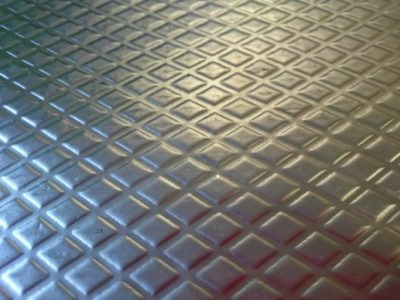
These versions feature a self-adhesive bitumen layer protected by black PE foil with a diamond embossed pattern.
Benefits
- Ideal for flat sound insulation applications
- Strong performance for reducing transmission loss
- Excellent anti-vibration capabilities
- PE foil prevents oil seepage from the bitumen
- Easy bonding with other substrates to form composites
These barrier products are popular in environments that require a clean, tidy finish and reliable anti-vibration performance.
2.3 Bitumen Aluminium Acoustic Barriers (C024)
The C024 barrier features a laminated combination of bitumen, polymers, and mineral fillers. Its most distinctive feature is the aluminium foil facing, which makes it suitable for high-temperature installations.
Best Uses
- Engine compartments
- Agricultural machinery
- Heavy construction vehicles
- Marine engines
This product offers robust sound damping while withstanding heat and harsh operating conditions.
3. Where Acoustic Barriers Are Used: Real-World Applications
Because of their versatility and performance, acoustic barriers are used across a wide range of industrial, commercial, and domestic applications.
Common Use Cases
- Automotive industry: Reducing engine noise, door panel vibration, and cabin sound transmission.
- White goods & appliances: Quieting washing machines, dishwashers, refrigerators, and HVAC equipment.
- Lift cabins & metal furniture: Reducing drumming noise, vibration, and impact sounds.
- Steel sinks & tubs: Preventing reverberation and improving user comfort.
- Agricultural & construction vehicles: Controlling engine, drivetrain, and cabin noise.
- Machinery & equipment housings: Improving operator comfort and ensuring compliance with noise regulations.
- Pipe insulation applications: Minimising noise from fluid movement or mechanical vibration.
Because acoustic barriers can be supplied in sheets, die-cut parts, or water-jet-cut components, they are adaptable to both standard and custom installations.
4. How Acoustic Foam Complements Acoustic Barriers
While acoustic barriers block sound via mass, acoustic foam plays a different role: it absorbs sound within a room. Together, the two materials create a complete noise-control system.
What Acoustic Foam Does
- Reduces echoes, reverberation, and sound reflections
- Improves clarity in recording studios, offices, home theatres, and public spaces
- Works best for mid- and high-frequency sounds
- Comes in shapes like wedges, pyramids, or egg crates to maximize surface area
However, foam alone cannot “soundproof” a room. True soundproofing requires combining foam with barrier products, additional mass layers, or structural insulation.
5. Benefits of Using Acoustic Barriers & Barrier Products
Using high-quality acoustic barriers offers several advantages:
Major Benefits
- ✔ Effective airborne noise control in industrial and commercial setups
- ✔ Vibration damping for machinery, automotive panels, and equipment
- ✔ Thermal radiation resistance in specific barrier types
- ✔ Flexibility and ease of installation
- ✔ Compatibility with foams, adhesives, and various substrates
- ✔ Customizable formats (sheets, rolls, or precision-cut parts)
- ✔ Improved working conditions and compliance with noise regulations
Their ability to adapt to straight, curved, or uneven surfaces makes them one of the most versatile noise-control materials available.
6. Conclusion
Acoustic barriers have become indispensable in industries where noise reduction, vibration control, and durability are essential. Whether it’s improving the acoustics inside a vehicle, reducing machinery noise on a factory floor, or insulating appliances at home, barrier products provide the mass-based insulation needed to block unwanted sound effectively.
By combining acoustic barriers with complementary materials like acoustic foam, businesses and engineers can create bespoke solutions that tackle both absorption and transmission loss—a complete approach to sound management.
