
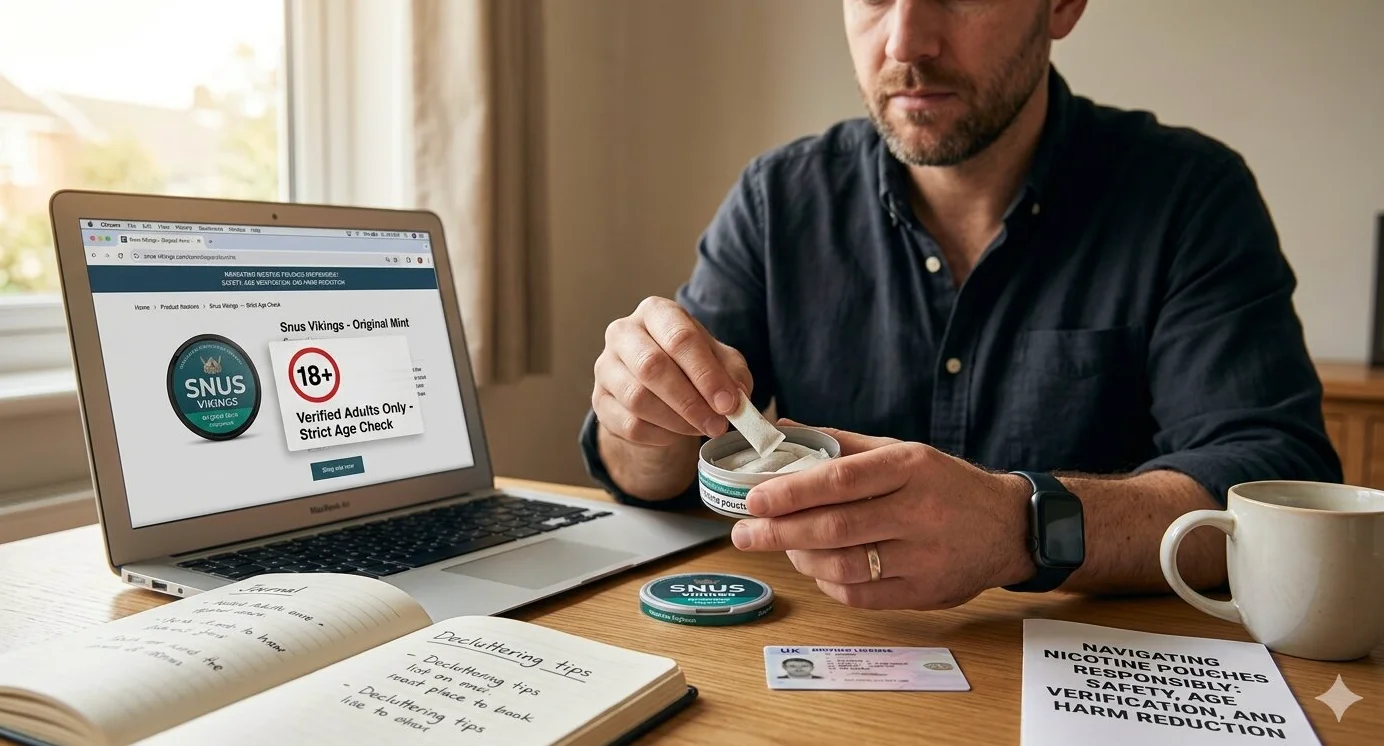
As nicotine pouches have become more visible across the UK, conversations around their safety, accessibility, and role in smoking reduction have naturally become more common. Like any nicotine product, they raise important questions about who they are intended for, how they should be sold, and what role they can realistically play for adult smokers looking to move away from cigarettes.
Some of those discussions are sensible and necessary. Concerns about underage access to nicotine products are entirely valid, and responsible retailers should absolutely be expected to operate strict safeguards to prevent sales to anyone under 18.
At the same time, it is also important to separate genuine concerns from misunderstandings about what nicotine pouches actually are and how they are typically used by adults.
For many adult smokers and vapers, nicotine pouches are not a novelty product at all. They are increasingly being used as a practical tobacco-free alternative that fits more easily into modern life than smoking, while avoiding many of the frustrations associated with traditional nicotine replacement products.
Understanding how nicotine pouches are sold, who uses them, and how reputable retailers manage age restrictions helps provide a more balanced picture of the category as a whole.
Why Responsible Online Retailers Often Have Stronger Safeguards Than Physical Shops
There is a common assumption that age-restricted products are automatically safer to sell in person than online. In reality, reputable online nicotine retailers often operate with significantly more robust verification systems than many traditional shops.
Buying a packet of cigarettes in a busy convenience store may involve little more than a quick visual age estimate from a cashier. Online sales, by comparison, typically involve multiple verification layers before a purchase can even be completed.
The first step is usually a basic age-gate confirming that the visitor is over 18. While this alone would obviously not be sufficient, it acts as an initial barrier similar to those used across alcohol and gambling websites.
The more important checks happen during the purchasing process itself.
Most legitimate online nicotine retailers use advanced age verification systems that compare customer details against established public records or credit reference databases. This allows the retailer to confirm that the purchaser is an adult using genuine information, rather than relying solely on appearance or judgement in a shop queue.
Payment systems also create an additional barrier.
Online purchases generally require a valid debit or credit card registered to an adult. If account details and age verification records do not align properly, transactions can be flagged or rejected before the order is approved.
This creates several layers of accountability that simply do not exist with cash purchases.
The Difference Between Controlled Advertising and Public Shop Displays
Another important distinction involves marketing exposure.
Physical tobacco and nicotine displays in shops are visible to anyone walking past, regardless of age. By contrast, reputable online retailers operate within much more controlled advertising systems.
Digital advertising platforms now apply increasingly strict restrictions around age-sensitive products. Reputable nicotine retailers are expected to ensure their marketing is targeted exclusively towards adults and avoids imagery, language, or themes likely to appeal to children.
Online systems also allow for far more precise audience targeting.
Rather than displaying products openly in public retail spaces, online advertising can be limited specifically to adult users already searching for smoking alternatives or nicotine-related products.
That does not remove the need for regulation, but it does mean reputable online environments often provide more control over audience exposure than people initially assume.
Who Actually Uses Nicotine Pouches?
Despite concerns that nicotine pouches primarily appeal to teenagers, customer demographics from specialist retailers often show a very different picture.
Data from established online retailers consistently suggests that the vast majority of users are established adult nicotine consumers rather than younger first-time users.
At Snus Vikings, for example, less than 20% of users fall within the 18–24 age group despite all customers being verified as adults. The largest customer segment instead sits within the 25–45 bracket, representing almost two-thirds of the customer base.
There are also significant demographic differences between men and women within the category. Across most age groups, male customers outnumber female customers by roughly three to one or more.
This matters because it reinforces the reality that nicotine pouches are generally being used by existing adult nicotine consumers, particularly former smokers or vapers, rather than functioning as a youth-oriented trend product.
Why Some Smokers Prefer Pouches Over Traditional Nicotine Replacement Products
Nicotine replacement therapies such as patches and gum remain valuable tools for many people trying to quit smoking.
However, they are not universally appealing.
Patches are intentionally simple and functional, but that simplicity can also make them feel detached from the routines and behavioural habits associated with smoking. Nicotine gum offers more interaction, but many products remain limited in terms of flavour variety and nicotine strength.
For long-term smokers, especially those used to stronger nicotine intake, these options can sometimes feel unsatisfying or difficult to maintain consistently.
Nicotine pouches sit somewhere between traditional nicotine replacement products and smoking alternatives like vaping.
They provide nicotine orally rather than through inhalation, much like nicotine gum, but they also offer:
- wider flavour variety
- more flexible nicotine strengths
- discreet use
- no smoke or vapour
- no lingering odour
For many users, this makes the transition away from cigarettes feel less clinical and more sustainable long term.
Harm Reduction and the Difference Between Nicotine and Smoking
One of the most important distinctions in any discussion about nicotine products is the difference between nicotine itself and the damage caused by smoking combustible tobacco.
Nicotine is addictive, and no responsible retailer should pretend otherwise.
However, most of the severe health risks associated with smoking come from the combustion process itself, including exposure to tar, carbon monoxide, and thousands of chemicals produced when tobacco burns.
Tobacco-free nicotine pouches eliminate combustion entirely.
There is:
- no smoke
- no tobacco leaf
- no ash
- no inhalation
That does not make nicotine pouches risk free, but it does place them within the broader category of smoke-free nicotine alternatives that many public health discussions increasingly view as lower risk compared with cigarettes.
For adult smokers unable or unwilling to quit nicotine entirely, switching away from combustible tobacco can still represent a substantial reduction in harm exposure.
Understanding Strengths and Side Effects
Nicotine pouches are available in a wide range of strengths, which is one reason responsible product labelling is so important.
Reputable manufacturers clearly state nicotine content both per pouch and per gram, allowing users to make informed decisions based on their existing nicotine tolerance.
People new to nicotine pouches may sometimes experience temporary side effects such as:
- mouth irritation
- hiccups
- nausea
- headaches
- gum sensitivity
These effects are usually associated with using strengths that are too high initially or with unfamiliarity during early use.
Most experienced users recommend starting with lower or moderate strengths before experimenting with stronger products.
As with any nicotine product, users should also remain aware that nicotine dependence itself can continue even after switching away from smoking.
The Importance of Responsible Retailing
The nicotine pouch category will continue attracting scrutiny as it grows, and rightly so.
Age restrictions, advertising standards, and product compliance all matter enormously. Responsible retailers should actively support strict enforcement against underage sales and counterfeit products.
At the same time, adult smokers deserve access to accurate information about lower-risk alternatives that may help them move away from combustible tobacco products.
That balance is important.
Protecting young people and supporting adult harm reduction are not opposing goals. Both can exist simultaneously when products are sold responsibly, marketed appropriately, and backed by strong age verification systems.
The Bottom Line
Nicotine pouches are not for non-smokers, children, or anyone who does not already consume nicotine.
But for adult smokers and vapers looking for a smoke-free alternative, they are increasingly becoming a practical option that fits more naturally into modern life than cigarettes, while avoiding many of the drawbacks associated with vaping or traditional nicotine replacement therapies.
Reputable online retailers now operate sophisticated age verification systems, controlled marketing practices, and traceable purchasing processes designed specifically to prevent underage access.
At the same time, the products themselves provide adult nicotine users with a tobacco-free option that removes combustion, smoke, ash, and vapour from the equation entirely.
Ultimately, the goal should remain clear:
keep nicotine products away from children, while giving adult smokers realistic and lower-risk alternatives if they are trying to move away from cigarettes.

Doris Pollard, a mesmerizing wordsmith and experienced blogger, crafts narratives that carry readers into unexplored realms. Infused with insightful perspectives and vibrant storytelling, Doris’s mastery of language captivates both hearts and minds, making an enduring impression on the literary landscape.