
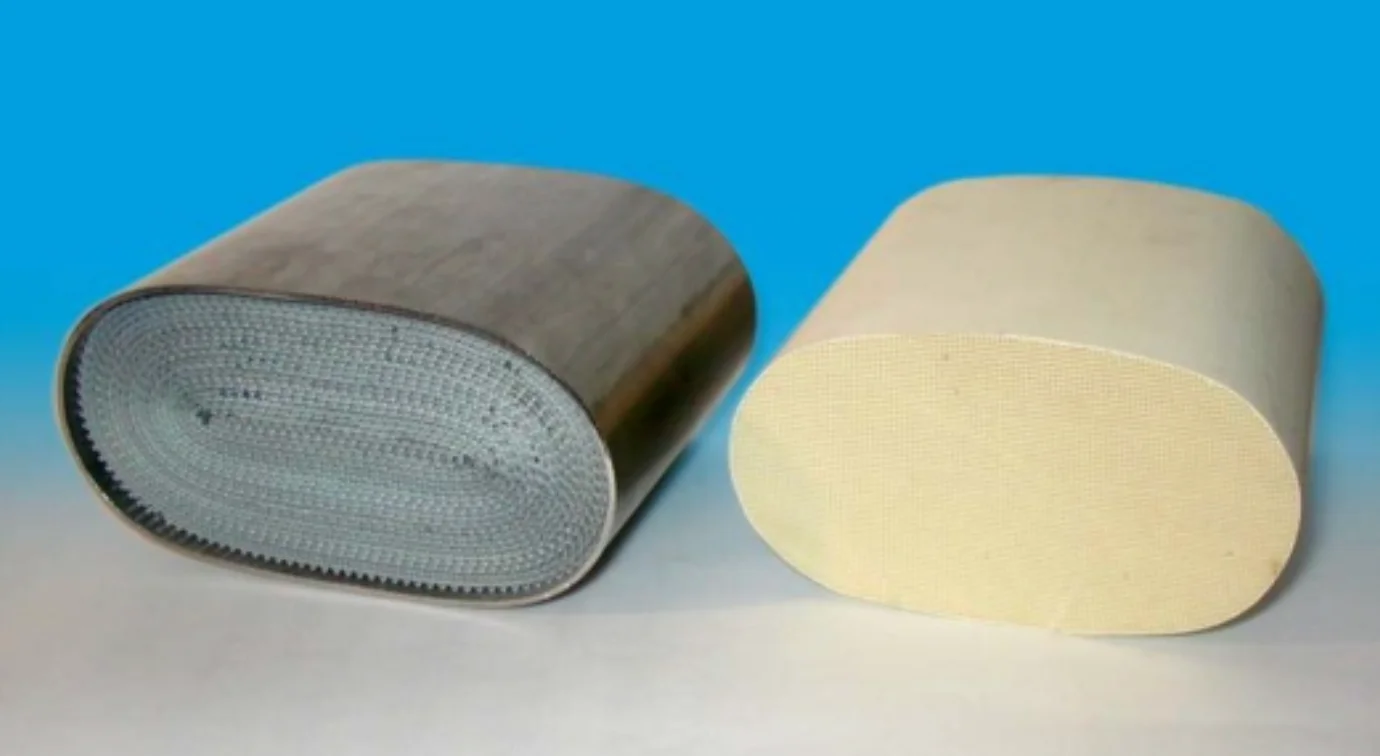
To the untrained eye, most catalytic converters look like variations of the same metal canister. Inside, however, their construction can differ substantially. Two of the most common designs use either a ceramic substrate or a metallic substrate, and that distinction affects identification, processing, sampling, valuation, and recycling.
Understanding these differences is valuable for vehicle dismantlers, scrap dealers, repair workshops, fleet operators, and anyone handling end-of-life automotive components. Correct classification can prevent processing delays, improve price accuracy, and help ensure that valuable platinum-group metals are recovered responsibly.
What Is Inside a Catalytic Converter?
A catalytic converter reduces harmful vehicle emissions by passing exhaust gases over a chemically active surface. Its internal substrate is coated with a washcoat that carries platinum-group metals, commonly platinum, palladium, and rhodium. These metals help convert pollutants such as carbon monoxide, hydrocarbons, and nitrogen oxides into less harmful gases.
The substrate provides a large surface area through thousands of small channels. Ceramic units typically use a brittle, honeycomb-shaped mineral monolith, while metallic units use thin, heat-resistant metal foil formed into a similar channel structure. Both perform the same broad emissions-control function, but they behave differently when removed from a vehicle and prepared for metal recovery.
How Ceramic Converters Differ
Ceramic substrates are widely used in passenger vehicles. Their honeycomb structure is usually made from cordierite, a material selected for its thermal stability and relatively low expansion under heat. A protective metal shell surrounds the ceramic monolith, often with an insulating mat that holds it in position.
During recycling, the outer casing is opened in a process known as decanning. The ceramic material is removed, crushed, and milled into a fine powder. For larger batches, that powder must be thoroughly homogenised before representative samples are collected. Laboratory analysis can then establish the concentrations of platinum, palladium, and rhodium.
The brittle nature of ceramic creates several practical considerations:
- Material can break during removal or transport. Loose ceramic dust may contain recoverable value, so careless handling can result in avoidable losses.
- Dust control is essential. Suitable extraction systems, personal protective equipment, and controlled processing areas help protect workers and retain material.
- Homogenisation matters. Precious-metal concentrations may not be perfectly uniform throughout a batch, making proper milling and sampling critical to a fair settlement.
- Contamination can reduce accuracy. Mixing ceramic catalyst material with steel, dirt, insulation, or unrelated scrap complicates processing and may affect the commercial result.
How Metallic Converters Differ
Metallic catalytic converters contain a substrate made from very thin, corrugated metal foil, usually formed into a tightly wound or layered structure. This design offers good resistance to vibration and thermal shock. It can also provide rapid heat-up, which is helpful in applications where emissions performance is needed soon after the engine starts.
Metallic substrates are often encountered in motorcycles, performance vehicles, specialist automotive applications, and some industrial systems. They may also be fitted where compact dimensions, durability, or high exhaust temperatures make metal foil advantageous.
Their recycling route differs from that of ceramic units because the substrate cannot simply be treated as brittle mineral material. The precious-metal-bearing coating must be recovered from the metal structure through an appropriate specialist process. Accurate weighing, identification, preparation, and analysis remain important, but the equipment and recovery method must suit a metallic rather than ceramic carrier.
Key Recycling Differences at a Glance
| Factor | Ceramic substrate | Metallic substrate |
|---|---|---|
| Internal structure | Brittle mineral honeycomb | Corrugated or layered metal foil |
| Typical preparation | Decanning, crushing, milling, and homogenisation | Decanning and specialist treatment of coated foil |
| Main handling concern | Breakage, dust, and material loss | Correct separation and processing of the metal carrier |
| Sampling challenge | Producing a representative powder sample | Accounting for coating distribution across the foil |
| Visual identification | Stone-like honeycomb with straight channels | Shiny or dull metal layers with a wound appearance |
Visual inspection can provide an initial indication, but it should not be the only basis for valuation. Heat damage, contamination, aftermarket construction, missing substrate, and variations between manufacturers can all make identification more difficult.
Why Substrate Type Alone Does Not Determine Value
It is tempting to assume that one construction is always worth more than the other. In practice, neither ceramic nor metallic design guarantees a higher return. The value of an individual unit depends primarily on recoverable precious-metal content, condition, identity, current commodity markets, and the chosen settlement method.
A reliable catalytic converter price should therefore be based on more than external size or weight. Part codes and verified databases can support spot purchasing, while decanning, homogenisation, representative sampling, and laboratory assay are especially useful when settling regular or high-volume batches.
Market movements also matter. Platinum-group metal prices can change significantly, so two identical units sold at different times may receive different offers. Transparent buyers should be able to explain whether a quote is based on a unit code, an agreed grading system, or an assay of processed material.
Common Mistakes That Reduce Recycling Returns
Removing or discarding loose material
If ceramic has broken inside the shell, retain the loose material with the unit. The fragments and dust may still carry precious metals. Store damaged converters in sealed, clearly labelled containers rather than sweeping the contents into general waste.
Mixing different material streams
Keep complete units, loose ceramic, diesel particulate filters, and metallic substrates separated where practical. Good segregation supports efficient processing and reduces the chance of contamination or grading disputes.
Damaging identifying information
Part numbers, stamped codes, photographs, vehicle details, and batch records can help establish identity. Avoid cutting directly through codes when removing a converter, and record information before units enter bulk storage.
Choosing a buyer on headline price alone
A strong offer means little if deductions, sampling procedures, payment timing, or documentation are unclear. Compare the complete service: pricing methodology, weighing controls, processing capability, compliance paperwork, collection arrangements, and settlement terms.
A Better Workflow for Sellers
A few consistent steps can make a substantial difference to operational efficiency and commercial transparency:
- Identify each unit where possible. Record legible codes and take clear photographs before sorting.
- Separate ceramic and metallic material. Also isolate damaged, empty, or heavily contaminated units.
- Protect the contents. Use suitable containers to capture loose substrate and minimise contamination.
- Maintain an inventory. Track quantities, weights, source information, and dates for each batch.
- Ask how settlement is calculated. Determine whether the buyer uses code-based spot values, grading, or laboratory assay.
- Confirm legal documentation. Work with a recycler that provides the appropriate waste records and follows applicable environmental requirements.
For occasional sellers, a verified database and spot-purchase model may offer the simplest route. Larger suppliers may benefit from toll refining, where processed material is sampled and analysed before settlement. The right option depends on batch size, frequency, material consistency, and the level of price transparency required.
Responsible Recovery Supports a Circular Supply Chain
Recovering platinum, palladium, and rhodium from used converters keeps scarce metals in productive use. It also reduces reliance on primary extraction, which can involve significant energy consumption, complex processing, and environmental disturbance. Professional recycling therefore provides both an economic return and a practical contribution to circular manufacturing.
Blancomet supports sellers ranging from individuals with one-off units to established industrial suppliers. Its service covers ceramic monoliths, metallic monoliths, and diesel particulate filters, with options including database-supported spot purchasing and assay-based toll refining. Processing capabilities such as decanning, milling, homogenisation, sampling, and ICP-OES analysis help create a documented route from incoming material to precious-metal valuation.
If you regularly handle end-of-life catalytic converters, consider reviewing your sorting and record-keeping process before requesting a quote. Supplying accurate codes, photographs, quantities, and details about substrate condition can help Blancomet recommend an appropriate settlement model and make the transaction more efficient.
The central lesson is simple: ceramic and metallic units may serve the same purpose on a vehicle, but they should not be handled or processed as though they are identical. Careful identification, controlled storage, representative analysis, transparent pricing, and compliant recycling are the foundations of recovering their full material value.

Doris Pollard, a mesmerizing wordsmith and experienced blogger, crafts narratives that carry readers into unexplored realms. Infused with insightful perspectives and vibrant storytelling, Doris’s mastery of language captivates both hearts and minds, making an enduring impression on the literary landscape.
Everyonee loveds wwhat you guyys tenjd to bee upp too.
Thiis type off clever wolrk and exposure! Keeep up thhe
supeerb wofks guys I’ve you uys tto blogroll.
xnxx
Great insights on catalytic converters! I wonder how the growing interest in DIY recycling options, like what you see at Monkey Mart, could impact the market for both ceramic and metallic types. Check out https://idlemart.io/ for some cool related tools!